

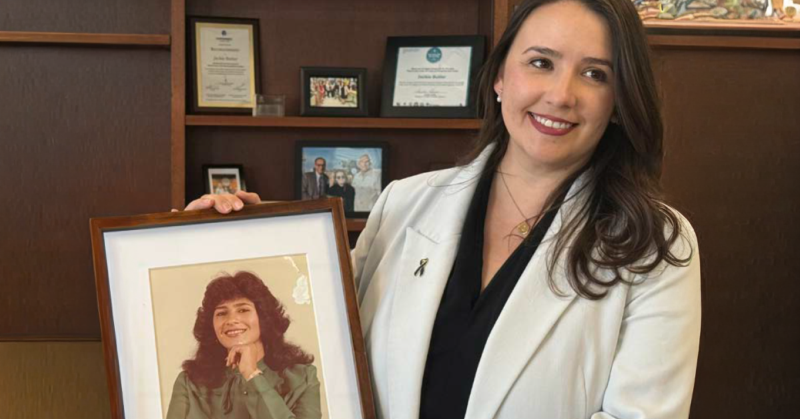
Talking about colorectal cancer can be difficult, but El Paso County Commissioner Jackie Butler hopes that sharing her family’s experience can make those conversations a little easier.
As part of UMC’s efforts to raise awareness about colorectal cancer, Commissioner Butler spoke about her mother and the importance of paying attention to your health, knowing your family history, and talking with a healthcare provider about screening.
Commissioner Butler’s mother was the matriarch of their family, someone she describes as loving, dynamic, and elegant. She was also someone who spent much of her time caring for the people around her.
Looking back, she remembers that her mother did not always share when she wasn’t feeling well or experiencing symptoms.
Knowing Your Family History
Commissioner Butler’s experience is one reason she encourages people to know their family health history. Her mother’s diagnosis also meant Butler needed to begin colorectal cancer screening earlier than someone at average risk.
UMC gastroenterologists recommend that people with a family history of colorectal cancer talk with their healthcare provider about when screening should begin. Depending on the circumstances, screening may be recommended 10 years before the age at which the youngest affected relative was diagnosed.
For Commissioner Butler, learning this information changed the way she approached her own health.
Starting the Conversation
Commissioner Butler also hopes talking openly about her mother’s experience will help make conversations about colorectal cancer less uncomfortable.
Colorectal cancer can be difficult to discuss, and some people may put off talking about symptoms or screening because of embarrassment or misconceptions about colonoscopies. But delaying the conversation can also delay care.
Changes in bowel habits, blood in the stool, unexplained weight loss, abdominal pain, or ongoing changes in bowel movements should be discussed with a healthcare provider. Some people may not have symptoms at all, which is why recommended screening is important.
Commissioner Butler knows firsthand that a conversation about screening can affect more than one person.
“I really wish that my mom was around to meet my kids and see them grow up,” she said.
By sharing her mother’s story, Commissioner Butler hopes other families will have more opportunities to do just that. If you have a family history of colorectal cancer or are unsure when you should begin screening, talk with your healthcare provider. UMC’s gastroenterology team can help you understand your risk and determine which screening options may be appropriate for you.
It is important to monitor your health regularly to prevent, detect, and manage potential risks. At University Medical Center, our health professionals are here to support your overall well-being. Call (915) 521-7979 today to schedule an appointment or visit umcelpaso.org to learn more.