
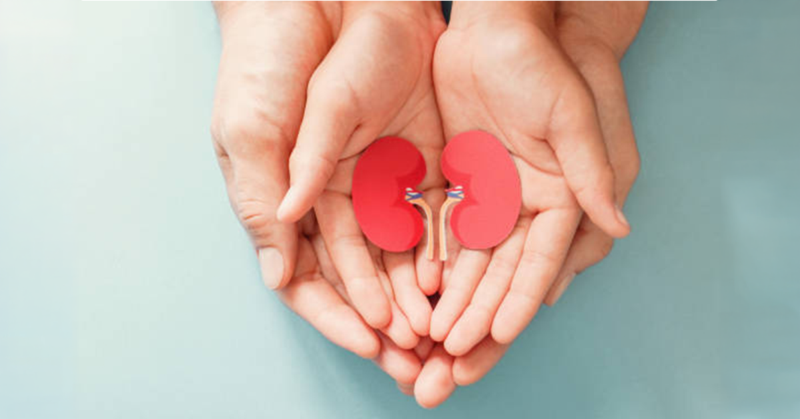
Every year on February 14, while flowers and chocolates take center stage, another kind of love story unfolds, one rooted in compassion, generosity, and hope. National Donor Day is observed annually to raise awareness about the life-saving power of organ, eye, tissue, blood, platelet, and marrow donation.
At University Medical Center of El Paso, National Donor Day is a reminder that love isn’t just something we celebrate, it’s something we can give in the most meaningful way possible.
Organ and tissue donation is often described as the ultimate gift of love, and for good reason. According to National Today, one organ donor can save up to eight lives, and through eye and tissue donation, can heal or improve the lives of more than 75 people.
The Need Is Real, and Urgent
According to the Health Resources and Services Administration (HRSA), as of May 2025, more than 103,223 men, women, and children in the United States were on the national organ transplant waiting list. Tragically, 13 people die each day while waiting for a transplant that never comes.
These numbers highlight an urgent truth: the need for donors far exceeds the supply. Each new registered donor brings hope to patients and families facing unimaginable uncertainty.
Clearing Up Common Myths About Organ Donation
Despite widespread support for donation, myths and misunderstandings still prevent many people from registering. Here are five common myths, debunked with facts from Mayo Clinic:
Myth #1: Doctors won’t work as hard to save my life if I’m a donor.
Fact: Medical teams are always focused on saving a patient’s life first. Emergency and hospital care teams are completely separate from transplant teams, which are only notified after all life-saving efforts have failed.
Myth #2: I’m too old or not healthy enough to donate.
Fact: There is no strict age limit for donation. Medical suitability is determined at the time of death, and many people with chronic conditions can still be donors.
Myth #3: Organ donation will disfigure my body or prevent an open-casket funeral.
Fact: Organ recovery is a respectful surgical procedure performed by medical professionals. It does not disfigure the body, and open-casket funerals remain possible.
Myth #4: Wealthy or famous people get organs first.
Fact: The transplant waiting list is managed based on medical urgency, blood type, and location, not income, race, or social status.
Myth #5: My religion doesn’t support organ donation.
Fact: Most major religions, including Catholicism, Islam, and Judaism, support organ donation and view it as an act of charity, compassion, and saving life.
Becoming a donor is a personal decision, but it’s one that can leave a powerful legacy. On this National Donor Day, UMC encourages our community to learn the facts, have conversations with loved ones, and consider registering as a donor.
This Valentine’s Day, let love go beyond words. Let it save lives.
Stay connected with UMC El Paso’s events, initiatives, and community recognitions. Visit umcelpaso.org to learn more, register for upcoming events, or celebrate our latest achievements.